
Our Office
Visit Us Online


Advances in dental materials, digital design, and restorative techniques make replacing missing teeth more predictable and natural-looking than ever before. Removable dentures remain a versatile, proven option that can restore chewing function, speech clarity, and facial support when teeth are lost. They are often an excellent solution for patients seeking a reversible, maintainable way to rebuild a complete smile.
At the office of Maryville Family Dentistry, we prioritize fit, comfort, and long-term oral health when designing any prosthesis. Rather than applying a one-size-fits-all approach, we take time to evaluate each person’s bite, facial profile, and daily needs so the final denture performs well and looks harmonious with the rest of the face.
This page explains how dentures work, the types available today, and what you can expect from diagnosis through delivery and follow-up care. The goal is to give clear, practical information so you can make an informed decision with your dental team.
Losing one or more teeth affects more than the space where the tooth used to be. Gaps change how your bite distributes force, which can alter chewing efficiency and the long-term health of neighboring teeth. Over time, missing teeth can also allow nearby teeth to tilt or drift, creating new gaps and bite problems that complicate future care.
Beyond function, tooth loss can influence the way facial muscles and soft tissues are supported. Without the vertical support provided by teeth, the lips and cheeks can appear less full; this change in facial contours may age a person’s appearance and affect how a smile photographs or relates to the rest of the face.
There are emotional and social dimensions as well—people often report feeling self-conscious about visible gaps, which can subtly change how they speak or smile. Replacing missing teeth can restore natural movement, improve nutrition by broadening comfortable food choices, and help people feel more at ease in social situations.

Dentures are removable dental appliances that recreate the appearance and function of natural teeth. Each denture consists of artificial teeth set into a shaped base that rests on the gums and underlying jawbone. The base may be acrylic, a flexible resin, or a hybrid framework, depending on the design and the patient’s needs.
Unlike fixed restorations such as bridges or dental implants, removable dentures can be taken out for cleaning and overnight rest, which makes hygiene straightforward and helps protect the tissues. Dentures can replace a single missing tooth area, multiple teeth, or an entire arch, offering a flexible approach when several treatment pathways are possible.
Retention and stability vary by design: conventional removable dentures rely on tissue contours and suction, while overdentures and implant-supported prostheses use attachments or implants to increase comfort and function. The right choice balances clinical considerations with patient preferences for maintenance and daily use.
Selecting a denture design begins with a comprehensive oral evaluation. We review the condition of remaining teeth, the quality and quantity of jawbone, the health of gum tissues, and the patient’s goals for appearance and function. Medical history, manual dexterity, and lifestyle also influence whether a removable denture is the most practical choice.
There are two broad categories of removable dentures: full (complete) dentures, which replace all teeth in an arch, and partial dentures, which fill gaps when some healthy natural teeth remain. Each category includes several adaptations—immediate dentures, overdentures, and implant-retained solutions—that address specific clinical situations.
When appropriate, we discuss how prosthetic attachments and implant support can improve retention and chewing efficiency. These options can be particularly helpful for lower-arch dentures, where conventional suction is often less effective. Our recommendations focus on predictable outcomes and long-term tissue health rather than temporary convenience.
Complete dentures replace all teeth in the upper arch, lower arch, or both. Their design prioritizes even contact, balanced occlusion, and the restoration of vertical height so the jaw and facial tissues are supported correctly. Careful tooth selection — in size, shape, and shade — helps the denture look natural and align with facial features.
Immediate Dentures
An immediate denture is placed at the same appointment as extractions so the patient leaves the office with a set of teeth in place. This approach prevents a period without teeth, but it often requires follow-up relines or adjustments as the extraction sites heal and tissues change shape.
Overdentures
Overdentures derive additional stability from remaining natural tooth roots or precision attachments. By preserving select roots or using roots prepared for attachments, an overdenture can improve retention while preserving jawbone and proprioception.
Implant-Supported Dentures
Implant-supported designs anchor a removable prosthesis to dental implants placed in the jaw. This hybrid approach combines the hygienic advantages of a removable denture with the increased stability of implant retention, making chewing and speaking more secure for many patients.
Partial dentures are used when one or more natural teeth remain. They are designed to clasp onto adjacent teeth or use precision attachments that distribute chewing forces and prevent remaining teeth from drifting into empty spaces. Modern partial frameworks can be lighter and more discreet than older cast-metal styles.
Materials have evolved to offer esthetic clasps and flexible bases, which make partial dentures better tolerated and more cosmetically pleasing. The planning process ensures the partial restores proper bite contacts and integrates with any planned restorative work on the remaining teeth.
When a partial denture is chosen, we coordinate its design with any necessary restorative treatments to the remaining teeth so both appearance and function are optimized for long-term success.
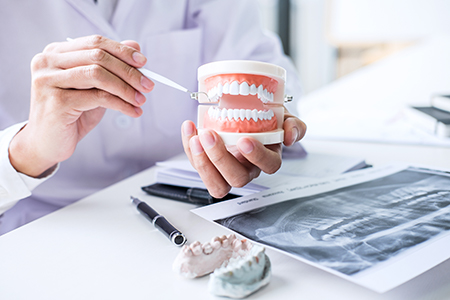
A successful denture begins with careful planning. This includes a medical and dental history review, a comprehensive oral exam, and any imaging needed to assess bone levels and soft tissues. Impressions, bite records, and digital scans are used to design a prosthesis that fits the patient’s anatomy and bite relationship.
In the lab phase, technicians work from detailed specifications to select tooth form and arrange teeth for natural esthetics and stable occlusion. Try-ins allow adjustments to tooth position, shade, or vertical height before the denture is finalized. For implant-assisted cases, surgical planning and a healing period are incorporated into the sequence.
Delivery appointments focus on fit and function. Initial adjustments are common as patients adapt; small pressure spots or minor occlusal interferences are relieved to promote comfort. We provide clear, practical instructions for daily care and schedule follow-ups to monitor tissue health and the prosthesis’ fit over time.

Adjustment is a normal part of the first weeks with a new denture. Many people notice increased saliva production initially and slight differences in speech or chewing. These sensations typically diminish within days to a few weeks as the mouth adapts and the patient gains confidence using the prosthesis.
Speaking and eating improve with practice: reading aloud, starting with soft foods, and chewing slowly on both sides help the muscles learn new patterns. Over time, patients regain much of their previous chewing ability, though certain very hard or sticky foods may remain challenging depending on the design.
Proper hygiene is essential. Rinse dentures after meals, brush them daily with a brush designed for prostheses, and soak them overnight in water or a recommended denture cleaner. Clean any remaining natural teeth and massage the gums gently to maintain tissue health. Remove dentures before bedtime to allow tissues to rest.
When extra stability is needed
Some dentures benefit from additional retention strategies, such as adhesives, attachments, or implant anchors. If you experience persistent instability, discuss implant-assisted options or attachment systems with your dental team to determine if they are appropriate for you.
Follow-up and relines
As the jawbone and soft tissues remodel after tooth loss, the fit of a denture can change. Routine checkups allow us to assess fit and recommend relines or adjustments to maintain comfort, function, and a secure fit over the years.
Our team focuses on practical, long-term solutions that preserve oral health and restore daily function. Whether you are evaluating a removable denture for the first time or considering an upgrade to an implant-assisted design, we will explain the choices and walk you through every step.
If you’d like to learn more about how dentures might fit into your treatment goals, please contact us for more information. We’re happy to answer your questions and help you explore the options that will best meet your needs.
Dentures are removable dental appliances that recreate the appearance and function of natural teeth. They consist of artificial teeth set into a shaped base that rests on the gums and underlying jawbone. The base may be acrylic, a flexible resin, or a hybrid framework selected to match a patient’s anatomy and needs.
Removable dentures can replace a single tooth area, multiple teeth, or an entire arch and are designed to restore chewing, speech, and facial support. Retention can come from tissue contours, suction, attachments, or implants depending on the design. Proper planning aims for balanced occlusion and a natural, comfortable result.
Modern options include complete (full) dentures that replace all teeth in an arch and partial dentures that fill gaps when healthy natural teeth remain. Immediate dentures are placed at the time of extractions so patients do not have a period without teeth, while overdentures and implant-supported prostheses add retention through preserved roots or implants. Material and design advances also produce lighter, more esthetic frameworks and improved tooth selection for a natural look.
Each type has tradeoffs for maintenance, hygiene, and long-term tissue health. Clinicians consider bone quantity, gum condition, remaining teeth, manual dexterity, and lifestyle when recommending an option. The best choice balances predictable function with the patient’s daily needs and preferences.
Choosing between a conventional denture and an implant-assisted solution depends on clinical factors and personal goals. Implants can greatly improve stability and chewing efficiency, particularly for lower-arch prostheses where suction is often less reliable, but they require adequate bone and a surgical phase. Conventional dentures remain a reliable, reversible option when implants are not suitable or when a non-surgical route is preferred.
A thorough evaluation including imaging and a review of medical history helps determine implant candidacy. If implants are feasible, implant-retained overdentures combine the hygiene advantages of a removable prosthesis with enhanced retention. Discussing your priorities for function, appearance, and maintenance will guide a tailored treatment plan.
The denture workflow begins with a comprehensive exam, medical and dental history, and any imaging needed to assess bone and soft tissues. Impressions, bite records, and digital scans capture the anatomy and occlusion used to design the prosthesis. Laboratory work and clinical try-ins allow adjustments to tooth position, shade, and vertical height before final fabrication.
Delivery appointments focus on fit, comfort, and balanced occlusion, and initial adjustments are common as patients adapt to the prosthesis. Clinicians check for pressure spots and occlusal interferences and relieve them to promote comfort and tissue health. Clear instructions for insertion, removal, and home care are provided, and follow-up visits monitor healing and fit.
Daily care includes rinsing dentures after meals, brushing the prosthesis with a denture brush or soft brush, and soaking overnight in water or a recommended cleaner. Clean any remaining natural teeth, rinse the mouth, and gently massage the gums to maintain tissue health. Removing dentures at night allows oral tissues to rest and reduces the risk of irritation.
Avoid abrasive toothpaste and hot water that can warp denture materials, and inspect the prosthesis regularly for chips or wear. If your denture uses attachments or implants, follow specific cleaning instructions for those components to prevent plaque buildup. Routine dental checkups let your clinician assess fit and recommend relines or repairs as tissues change.
Temporary changes in speech and chewing are common as the mouth adapts to a new denture; muscles need time to learn new patterns. Reading aloud, practicing speaking, and starting with soft foods can speed adaptation and build confidence. Most patients regain much of their prior function within days to weeks, though individual experiences vary.
Certain very hard or sticky foods may remain challenging depending on prosthesis design, and patients are advised to chew slowly and use both sides when possible. Implant-supported options often expand comfortable food choices by improving retention and bite force. Persistent difficulties with speech or chewing should be evaluated and adjusted by your dental team.
Denture longevity depends on materials, wear patterns, and changes in the jawbone and soft tissues; many dentures remain serviceable for several years with proper care. As bone remodels after tooth loss, the fit can loosen and relines or repairs become necessary to restore contact and stability. Regular exams allow clinicians to evaluate wear, fit, and tissue health and recommend appropriate maintenance.
Relines, rebases, or remakes are selected based on the extent of change and prosthesis condition: relines adjust the tissue surface, while remakes replace the prosthesis when indicated. Signs that a denture needs attention include persistent sore spots, altered bite, or movement during function. Prompt maintenance preserves comfort and reduces the risk of tissue irritation.
Partial dentures are designed to distribute chewing forces and prevent adjacent teeth from drifting into open spaces, which helps preserve occlusion and function. Well-planned clasping or precision attachments can make partial prostheses discreet and comfortable while integrating with existing restorations. Coordination with restorative work on remaining teeth ensures the partial supports long-term dental health.
Preserving healthy tooth structure and monitoring periodontal status are important when planning a partial denture to ensure long-term success. Flexible and esthetic clasp materials have improved patient acceptance and reduced visibility. Routine dental visits help detect changes in supporting teeth so adjustments or repairs can be made promptly.
Immediate dentures are provided at the time of extractions so patients leave the appointment with teeth in place, supporting appearance and facial contours during healing. Because extraction sites shrink and tissues remodel, immediate dentures commonly require relines or adjustments as healing progresses. Patients should expect follow-up visits in the weeks and months after placement to refine fit and relieve pressure spots.
Careful postoperative instructions and gentle handling of the prosthesis support comfort during the healing phase. Communication about soreness, persistent looseness, or difficulty eating is important so modifications can be made promptly. In many cases, staged treatment transitions from an immediate denture to a conventional or implant-assisted solution for more predictable long-term results.
At Maryville Family Dentistry, we emphasize individualized denture planning that considers each patient’s bite, facial profile, and daily needs to achieve a comfortable, natural outcome. Our clinicians use thorough clinical exams and modern digital records to design prostheses that support long-term oral health and esthetics. Try-ins and staged adjustments let patients participate in decisions about tooth position, shade, and vertical height before final delivery.
We provide clear instructions for home care and schedule follow-ups to monitor tissue health and fit, recommending relines or repairs when needed. When implant assistance is appropriate, we coordinate surgical planning and prosthetic design to ensure predictable function and hygiene access. Contact the practice to arrange an evaluation and discuss the denture options that best match your goals.
Email: